

I/O Interface Integration Trends: Key Considerations for Connector Design and Selection
I/O connectors are essential interface components that enable the transmission of electrical signals, data, and power between electronic devices and external systems. Common I/O interfaces such as USB, D-sub, and RJ45 are widely used in computing equipment, communication systems, industrial automation, and other electronic devices, supporting different data, signal, and network connectivity requirements.
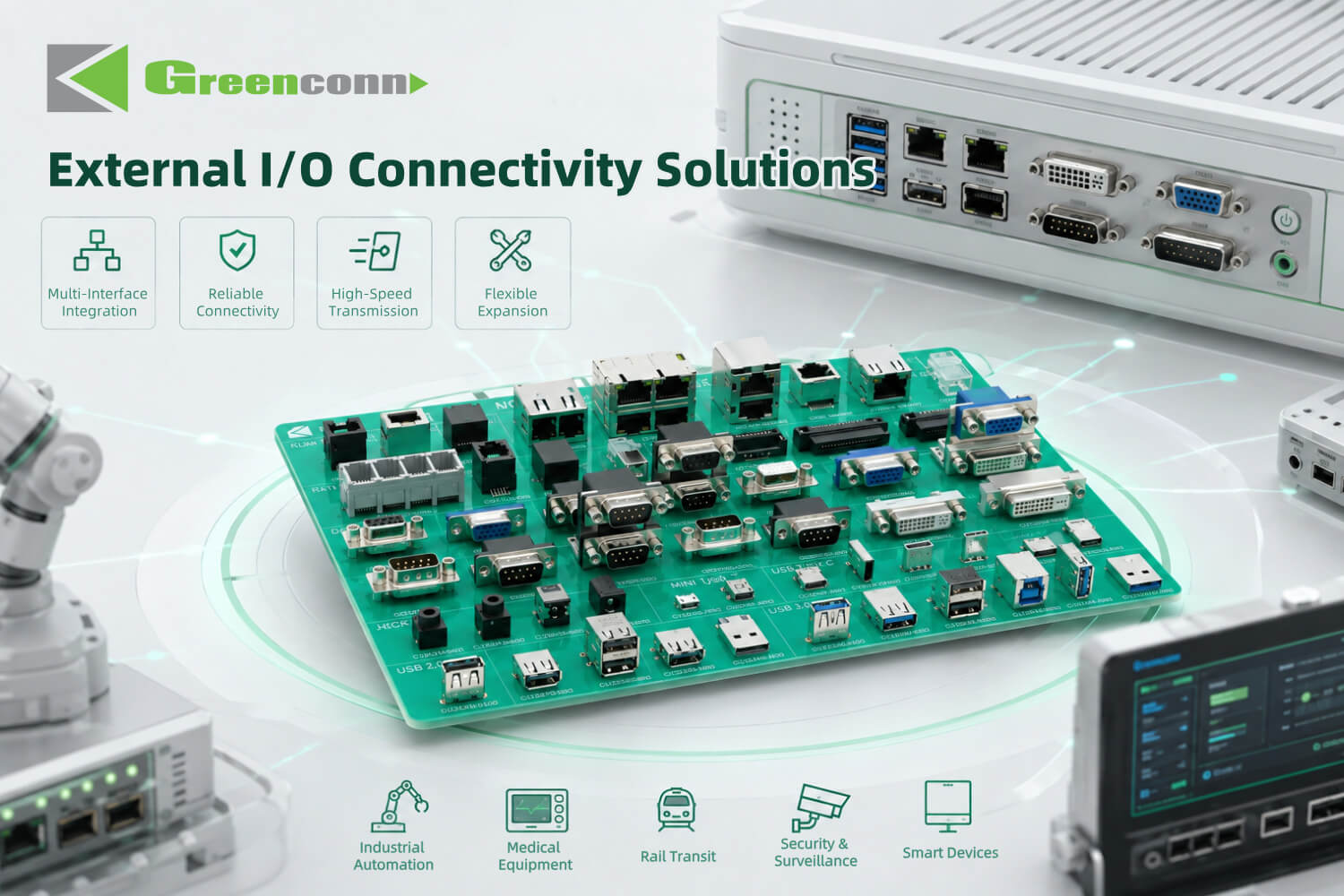
As electronic devices continue to evolve toward higher speeds, greater miniaturization, and higher levels of integration, available installation space is becoming increasingly limited. Achieving the right balance between multiple signal interfaces and space utilization has therefore become a key consideration in I/O connector design and selection.
Key Factors Influencing I/O Connector Design
l High-Speed Transmission and Signal Integrity
As data transmission speeds continue to increase, the impact of connectors on signal integrity becomes increasingly significant.
High-speed I/O connector design requires comprehensive consideration of factors such as characteristic impedance, insertion loss, return loss, crosstalk, and EMI/EMC performance. The internal terminal layout, contact structure, and shielding design can all affect the overall signal transmission performance of the connector.
l Multi-Interface Integration and Space Utilization
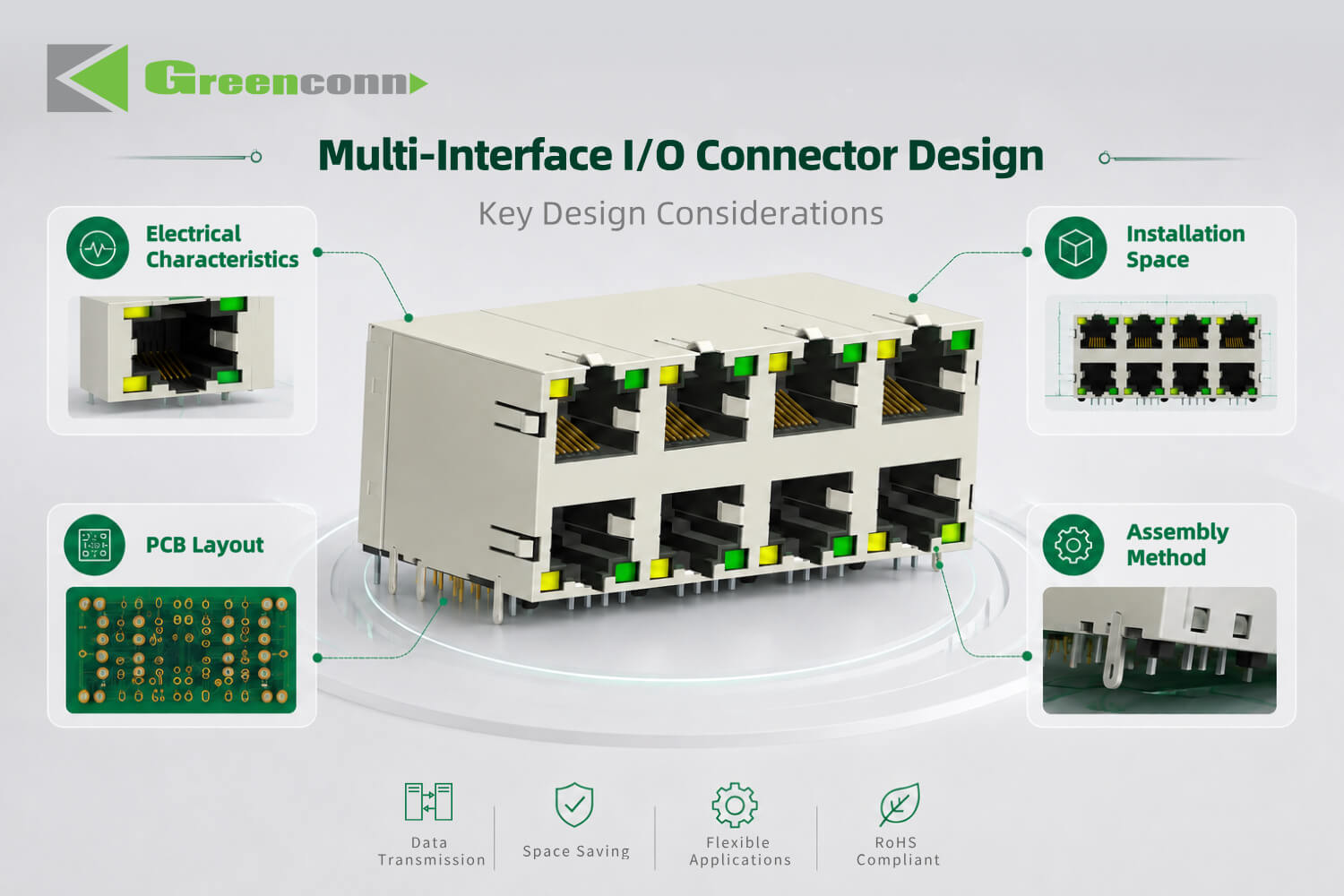
When USB, RJ45, D-sub, or other interfaces are integrated into a compact installation area, multiple factors need to be considered, including connector dimensions, interface spacing, mounting orientation, and cable routing.
As a result, miniaturization and multi-interface integration have become important directions in I/O connector design. Miniaturization is not simply about reducing connector size, while multi-interface integration is more than simply placing multiple interfaces together. It requires careful layout and isolation of different signals within a limited space, while ensuring that the connector meets electrical performance, mechanical strength, and assembly requirements.
l Mechanical Reliability
I/O interfaces are typically subjected to repeated mating and unmating cycles. Therefore, locking mechanisms, guiding structures, terminal retention force, housing strength, and mating durability all have a direct impact on long-term connector reliability.
For industrial equipment and other demanding applications, additional factors such as vibration, mechanical shock, and field maintenance requirements also need to be considered.
l Environmental Adaptability
Different applications impose different requirements on the operating environment of I/O connectors.
Industrial equipment, automotive electronics, and outdoor devices may be exposed to temperature variations, humidity, dust, vibration, and chemical substances. Connector selection should therefore take into account operating temperature, mechanical performance, protection requirements, and the environmental resistance of the materials used.
From Standard Interfaces to Customized Connector Solutions
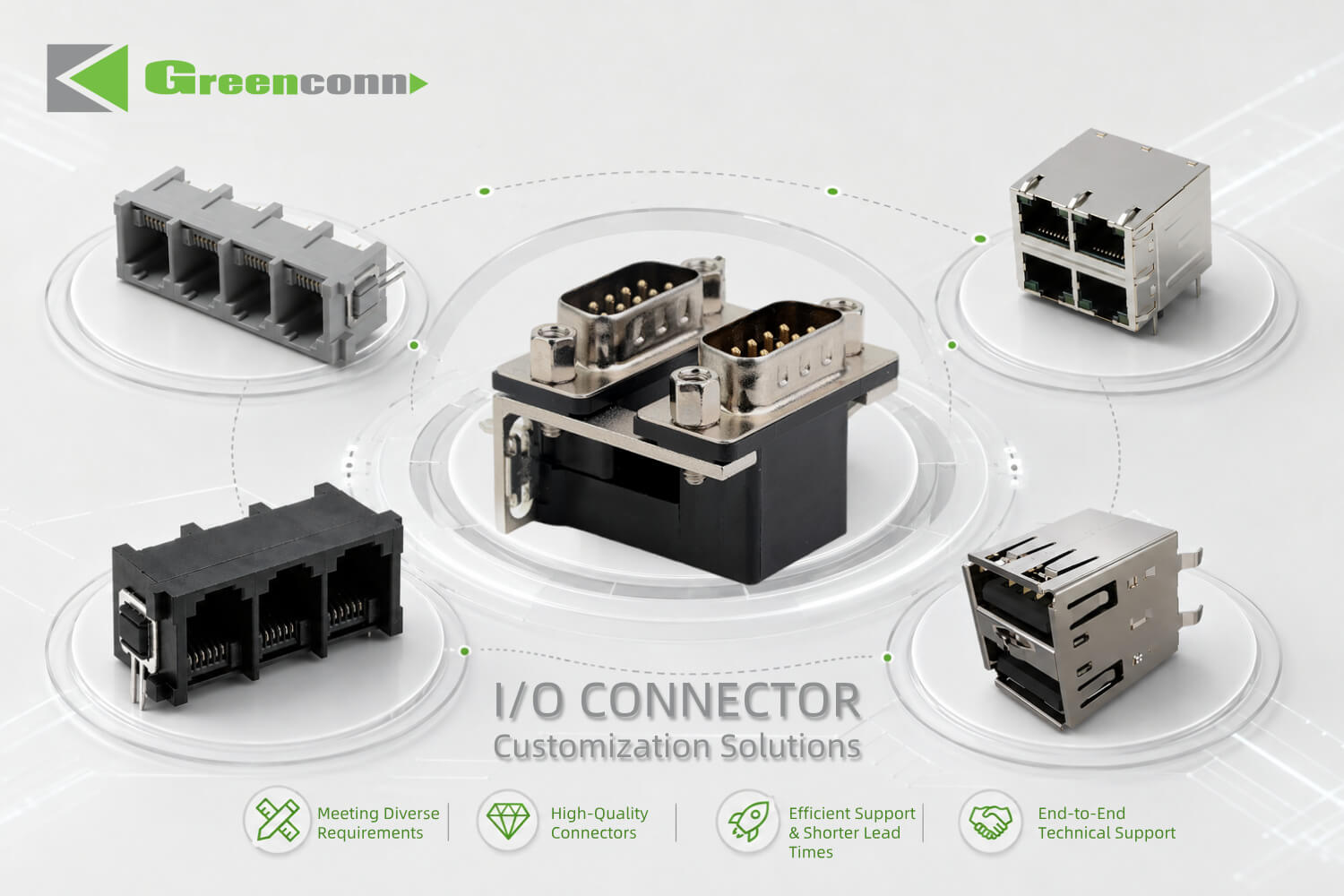
Standardized I/O interfaces can meet the connectivity requirements of a wide range of general-purpose devices. However, different equipment may have significantly different requirements in terms of installation space, mechanical structure, signal characteristics, and operating environment.
For example, even when the same USB, RJ45, or D-sub interface is used, different devices may require different connector heights, mounting orientations, fixing methods, or mechanical reliability levels.
For this reason, connector manufacturers need to provide more than standardized interface products. They also need the engineering capability to optimize connector structures, terminals, mounting configurations, and shielding solutions according to specific application requirements.
From requirement analysis and product selection to structural design, engineering validation, precision manufacturing, and quality control during mass production, comprehensive development capabilities can help customers achieve more reliable I/O connectivity within limited spaces and under complex operating conditions.
Reliable I/O Connectivity Starts with the Right Connector Design
As electronic devices continue to evolve toward higher speeds, greater miniaturization, and higher levels of integration, I/O connectors are no longer simply interface components. They have increasingly become an important factor influencing overall device performance and reliability.
From standardized interfaces such as USB, D-sub, and RJ45 to customized connector solutions designed for specific applications, effective connector design needs to balance electrical performance, space utilization, mechanical reliability, and environmental adaptability.
For connector manufacturers, the real value lies not only in providing connector products, but also in delivering reliable, manufacturable, and application-specific connectivity solutions tailored to customers' requirements.

