

Why Connector Manufacturing Is Increasingly Driven by Automation
As industries such as electric vehicles (EVs), robotics, industrial automation, and energy storage continue to evolve, connectors are becoming smaller, denser, and more reliable. At the same time, increasingly sophisticated product designs demand tighter dimensional tolerances, greater assembly consistency, and higher manufacturing quality.
For connectors, product performance depends not only on design, but also on the stability and precision of the manufacturing process. Critical operations—including terminal crimping, pin insertion, and housing assembly—directly influence electrical performance, mechanical reliability, and long-term durability. As a result, automated manufacturing has become a key enabler of high-quality connector production.
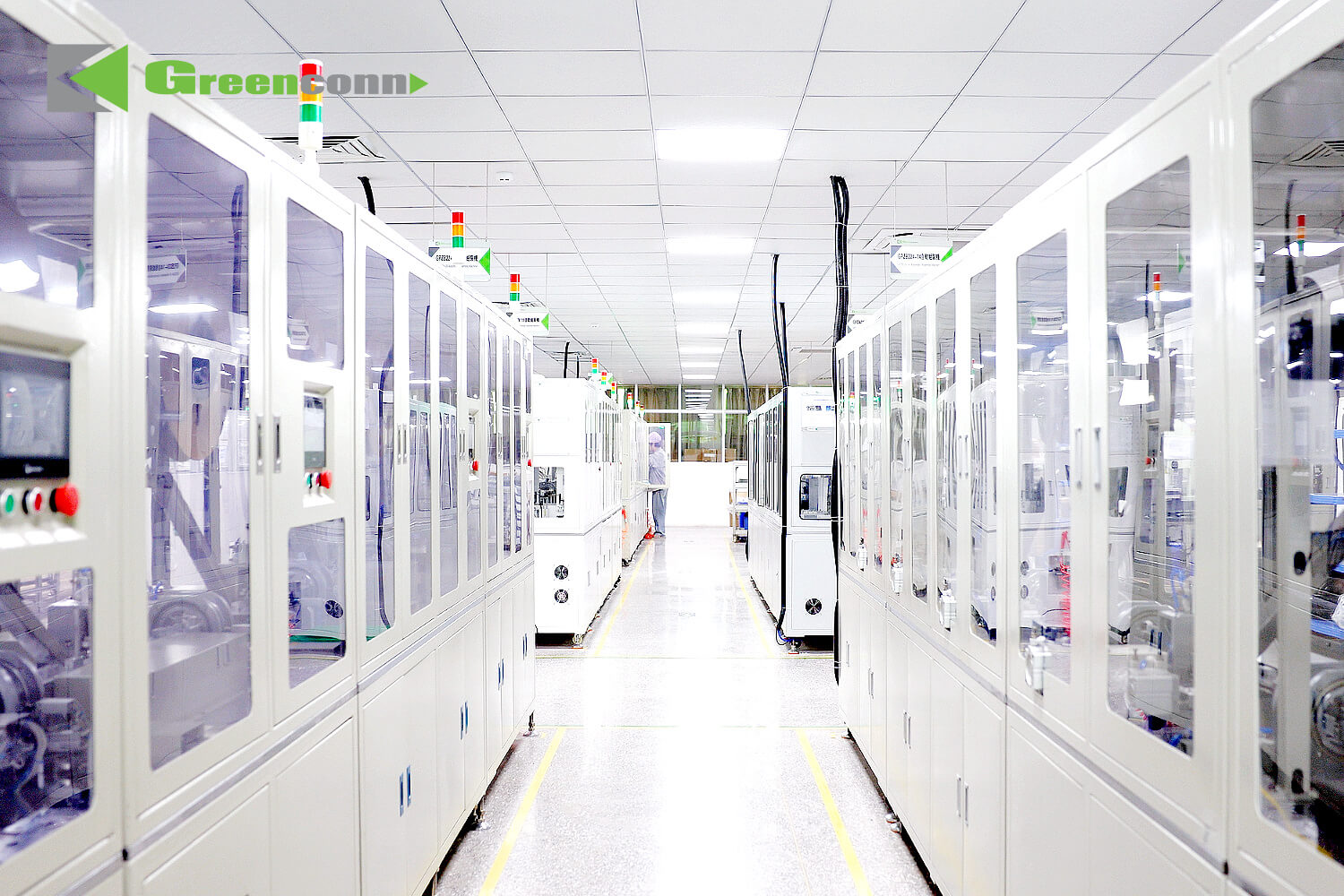
Greenconn automated connector assembly line
How Automated Manufacturing Enables Precision Assembly
Modern connector production integrates automated feeding, machine vision, precision assembly, inline inspection, and data traceability into a highly controlled manufacturing process. By standardizing each production step, automated assembly improves repeatability, manufacturing efficiency, and overall product consistency.
l Automated Feeding and Vision Positioning
Terminals, pins, and plastic housings are automatically supplied to the assembly stations, where CCD vision systems verify part orientation, alignment, and defects before assembly. This helps ensure stable and accurate positioning throughout the manufacturing process.
l Intelligent Positioning and Pick-and-Place
Sensors verify component positions before robotic manipulators or pneumatic vacuum nozzles precisely pick and transfer parts to assembly stations, where high-precision fixtures ensure accurate positioning throughout the assembly process.
l Precision Automated Assembly
Automated equipment performs critical operations such as terminal crimping, pin insertion, and housing assembly according to predefined process parameters. Key variables—including crimping force and insertion position—are continuously monitored to maintain process stability and assembly accuracy.
l Inline Inspection and Quality Traceability
After assembly, products undergo automated inspection for appearance, electrical performance, and critical dimensions. Manufacturing data is recorded throughout the production process, enabling quality traceability while providing valuable feedback for continuous process improvement.
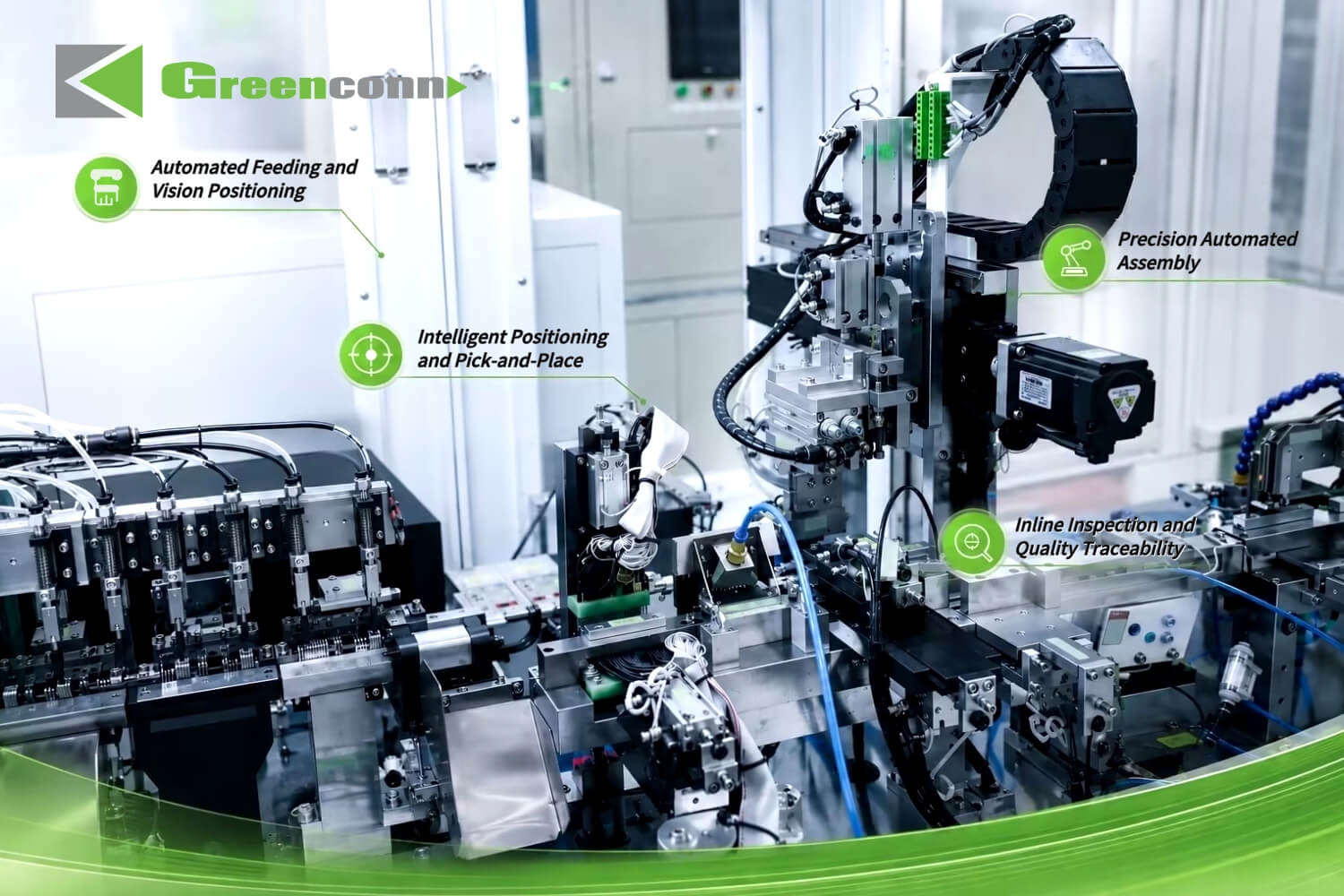
Key processes in automated connector assembly
Engineering Benefits of Automated Manufacturing
Beyond improving production efficiency, automated manufacturing provides a solid foundation for manufacturing consistency, quality control, and flexible production.
l Manufacturing Consistency
Standardized assembly processes help minimize operator variation, ensuring consistent crimp quality, assembly accuracy, and dimensional control across production batches.
l Comprehensive Quality Control
Inline inspection combined with production data monitoring enables rapid detection of manufacturing deviations, supports full product traceability, and provides valuable data for continuous process optimization.
l Flexible Manufacturing
Modular automated production lines enable rapid product changeovers, allowing manufacturers to efficiently support high-mix, low-volume production as well as customized connector solutions.
Automated manufacturing is no longer simply a way to increase productivity—it has become a critical foundation for delivering consistent product quality and supporting reliable, scalable connector production.
Greenconn continues to enhance its automated manufacturing capabilities by integrating automated assembly, inline inspection, and comprehensive process control throughout connector production. These capabilities help improve manufacturing consistency, production efficiency, and product quality, enabling reliable interconnect solutions for automotive electronics, industrial automation, robotics, energy storage, and other demanding applications.

